Location: Arusha, Tanzania
We woke up at 5 AM to a very heavy fog blanketing the entire rim of the crater, so thick we couldn’t see more than 15 feet in front of the car. After a quick breakfast of chapati (like sweet crepes) we were off, rushing to get down to the crater floor as close to sunrise as possible. It was really chilly so everyone was bundled up and joking about how we didn’t imagine a safari as requiring toques and mittens!
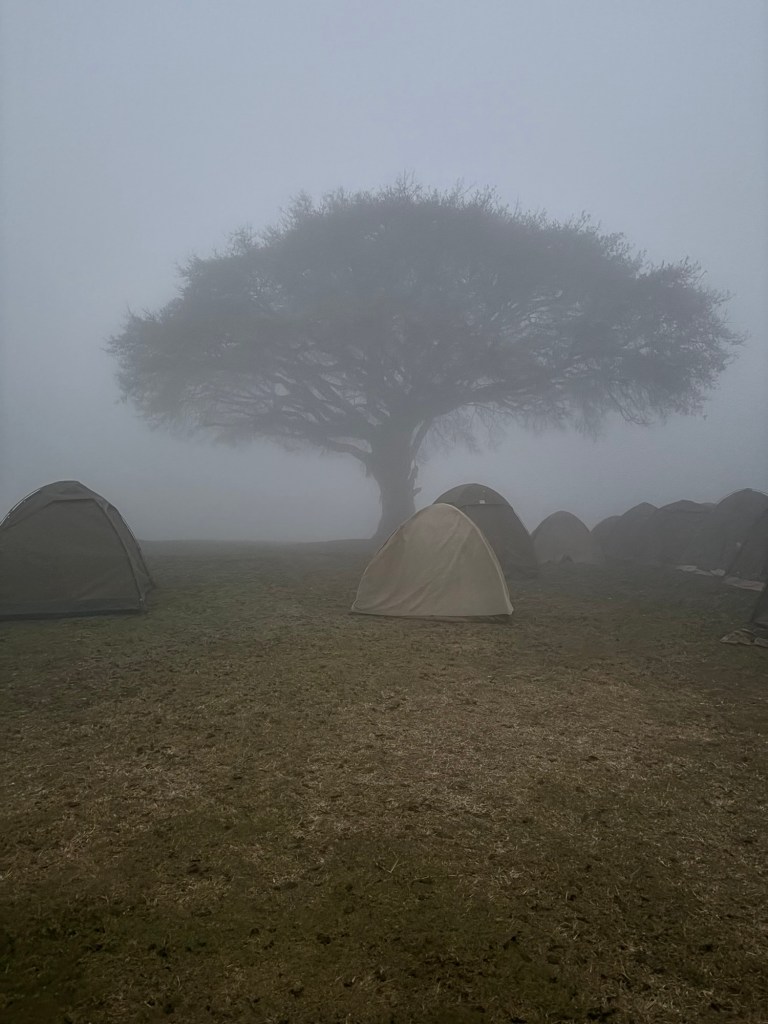
The drive was mildly unnerving because Isaac was still driving insanely fast in the fog, down a very narrow stone switchback with a steep drop-off on the cliffside. Him and his 17 years of experience were clearly comfortable with it, so it was probably fiiine and I was just being a weenie.
We went down over 600 meters in elevation out of the fog and were greeted with a view of a massive salt lake, sparkling in the morning sun that was peeking through the cloud cover. The golden light was shining onto the yellow grasslands, creating a stark contrast to the herds of animals below.

Within minutes we were rewarded with a view of two heavily pregnant lionesses, lounging just a little ways off the side of the road. They were extremely relaxed about the car, and Isaac informed us that most of the animals in the crater were used to cars driving around so we would be able to get really close! Gahhhhhh so exciting!!!
Once the lions wandered away we moved forward across the plains, and an enormous herd of wildebeests scampered across the road right in front of the car. They were a little bit afraid, which is apparently their primary survival mechanism. There are so many fun facts about the wildebeests so I’m giving you my favourite three.
- they are known as the ‘spare parts’ animal because they look really weird with a horse tail, lions mane beard, zebra stripes, a huge square head with thick horns, massive front legs and weirdly skinny back legs.
- A group of them is called a confusion of wildebeests.
- They are also known as gnu, which is supposedly the phonetic spelling of the cow sound they make. Gnuuuuuuu.

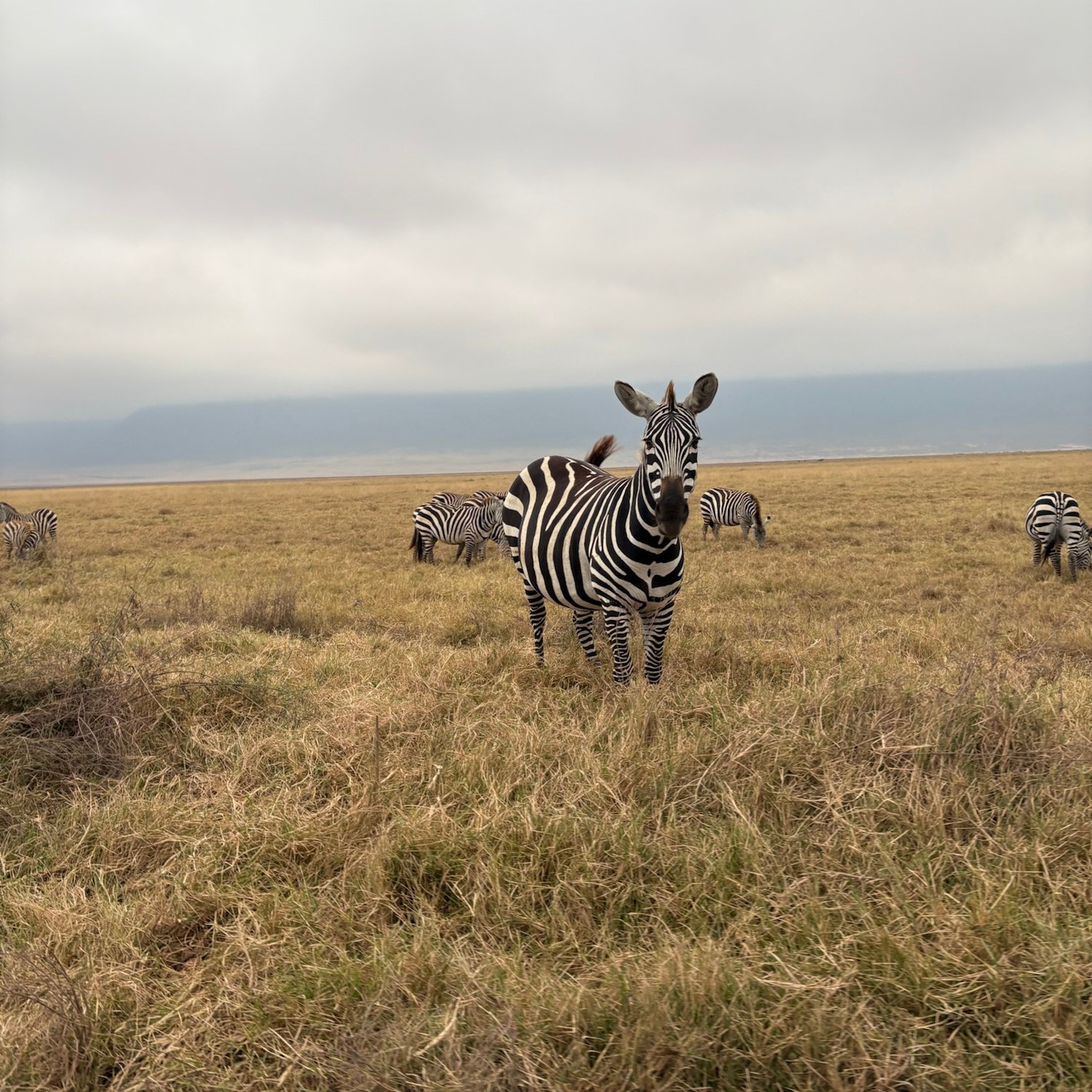
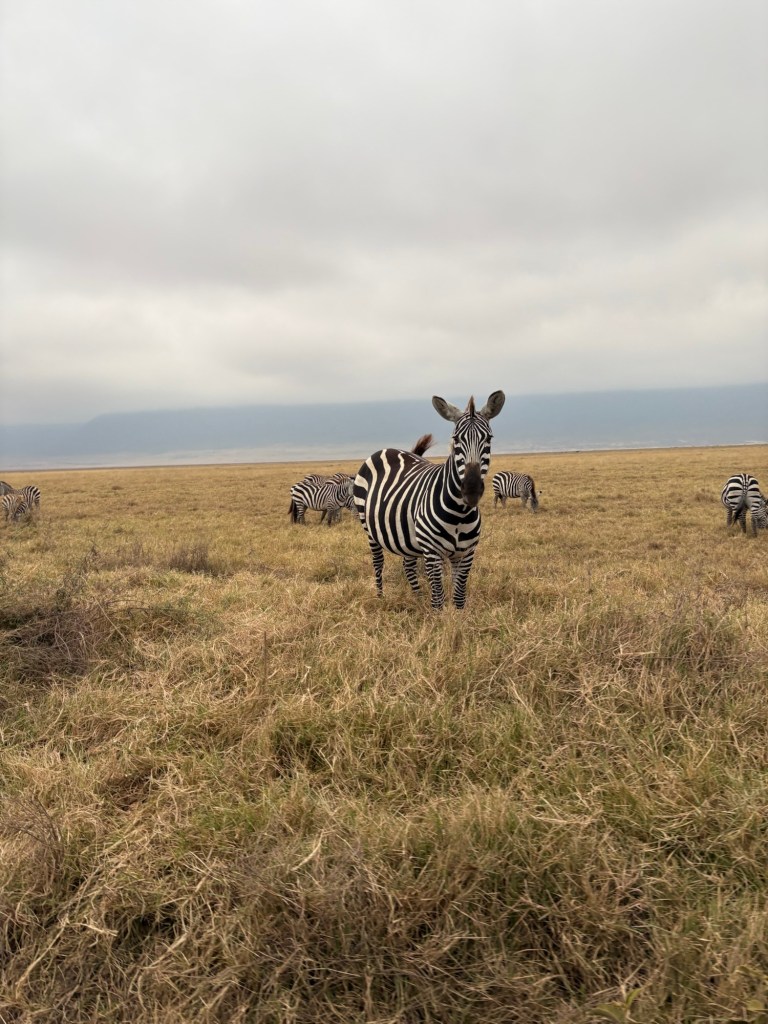
We got so insanely close to a dazzle of zebras (isn’t that a fun group name too?!), that we could hear them chewing the grass. For the most part they were unbothered with us, and continued to eat while we ogled from literally 10 feet away. I know I’ve seen zebras before but we all remarked how they are basically striped donkey/horses and I just think that makes me like them even more.
We saw so many animals it’s hard to remember them all, but some other stand-outs were a serval cat hunting mice in the grass, giant buffalo butts poking out of tall reeds in the swamp, little white cattle egrets picking up bugs that get disturbed by the bigger animals, and warthogs digging for grubs. There were flamingos, crocodiles, yellow billed storks, grey crowned cranes, and one million billion more gazelles. I had to start writing down what we were seeing so that I wouldn’t forget all the names!
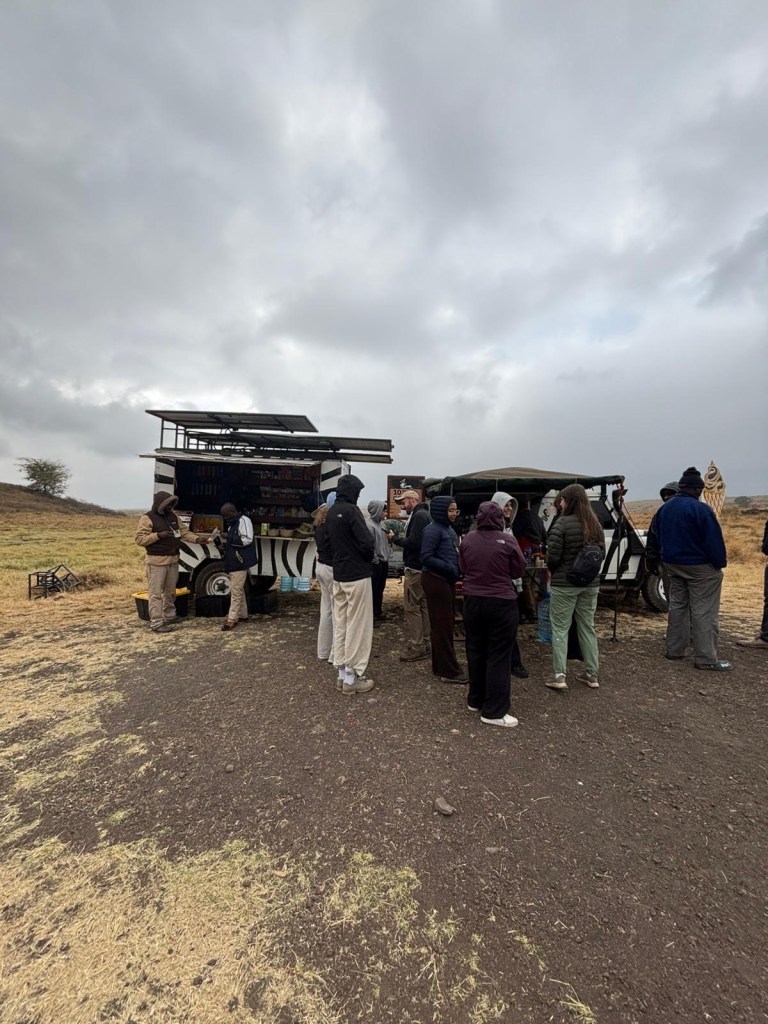
Something I did not expect at all was that there was a small coffee cart painted in zebra stripes smack dab in the middle of the crater. Why is this here!? It was oddly charming and a little confusing to drive up and grab a warm latte in the middle of a foggy grassland. It reminded me of something out of a Wes Anderson movie.
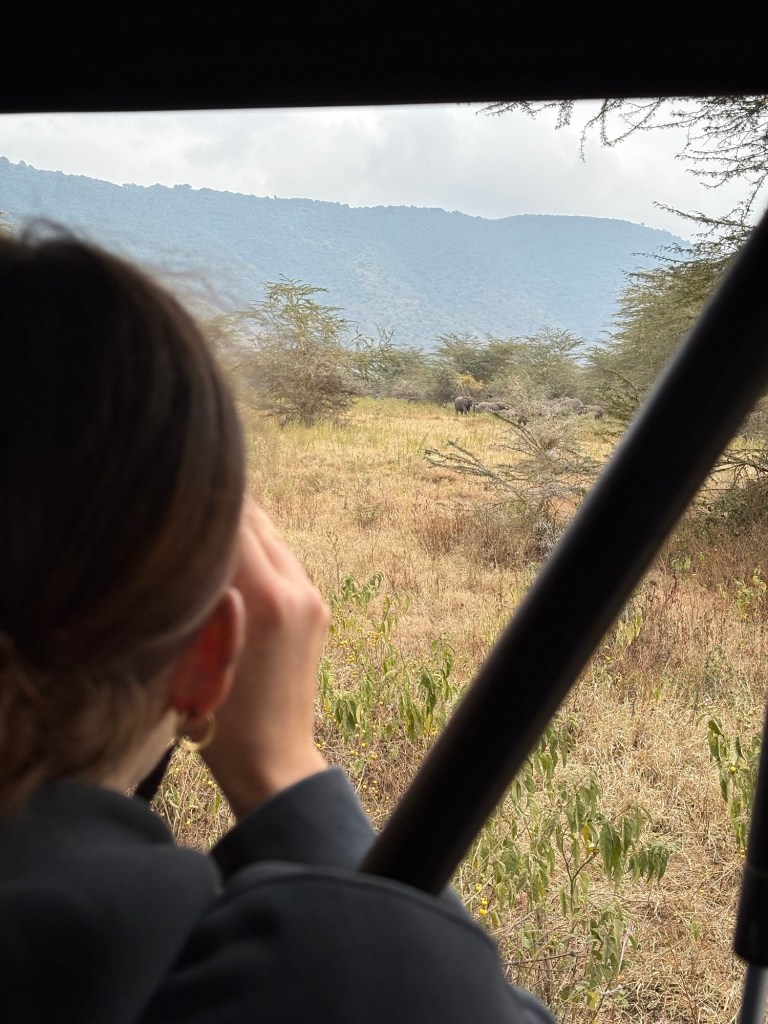
The day was passing by so quickly and I desperately did not want it all to be over. I think the universe must have heard me because on the way out we were treated to a family of a dozen elephants in the jungle just a little ways off the road.
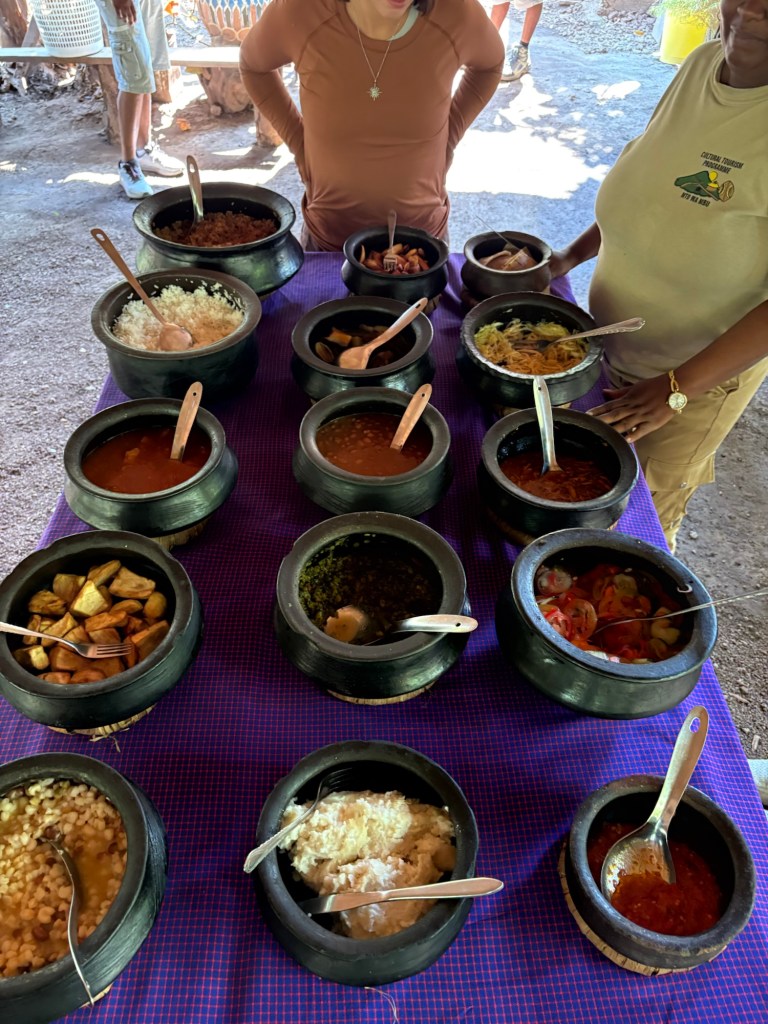
Sadly our safari had to come to an end, and it was a really long drive to get to our next stop, a peaceful village called Mto Wa Mbu. Almost our entire car dozed off on the drive there so before we knew it we were hopping out into the sun for a traditional Tanzanian lunch of cardamom cinnamon rice, ugali (cornmeal dough), stewed beef, sardines, tomato salad, spiced okra, fried plantains and a piripiri spicy sauce to top it all off. I’ve really been wanting to try more local food so I was very pleased that it was so delicious!
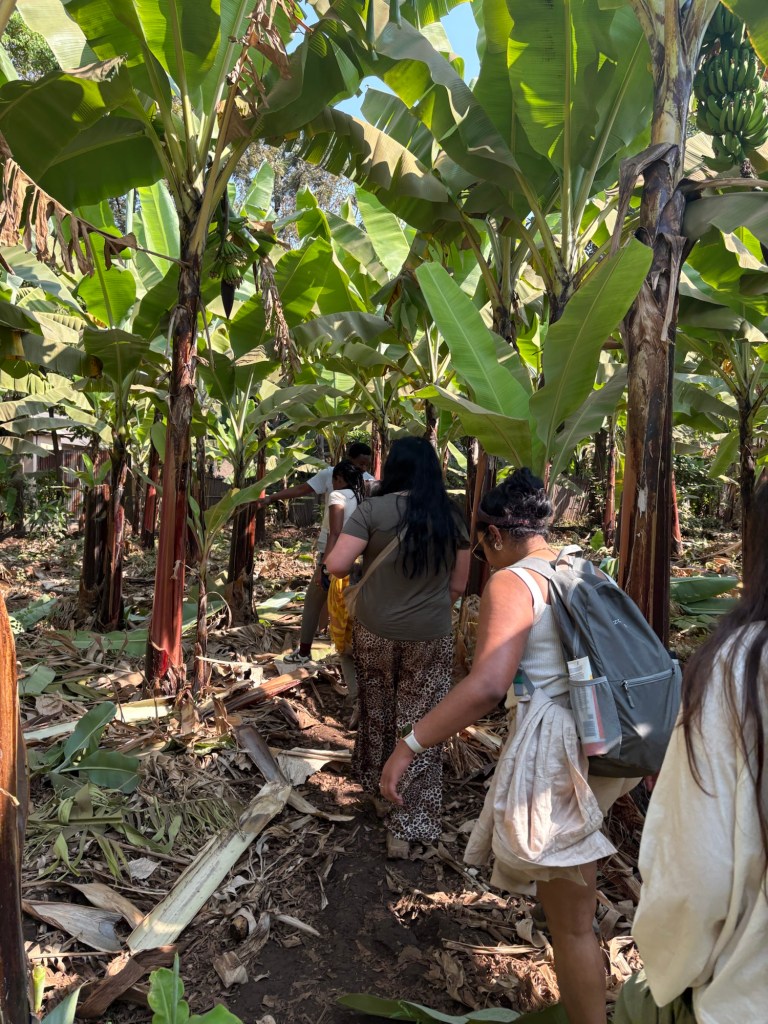
The locals of the village took us on a tour and we learned all about how the village is a melting pot of over 120 different tribes, with multiple religions and traditions. They emphasized how the village is peaceful and everyone accepts and appreciates the differences that all the tribes bring to their lives. A large portion of the income for the village is based on banana farming, so the first stop was a farm where they described how all parts of the banana tree are used, much of which is in construction of homes. I had no idea that banana trees only produce fruit once and then need to be cut down!
We walked through the forest, down back alleys and through town to our first stop, a Makande traditional wood carving shop. 6 men sat around on a raised platform whittling, carving and sanding down beautiful art pieces by hand. One of them gave us an explanation of the 4 types of wood they use and for what purpose, which made it all the more enticing when they let us loose in the shop to browse and barter over the different pieces. I was particularly impressed by the tall carvings called ujamaa, which are like hollow towers made up of people stacked on top of each other helping each other climb up. Ujamaa represents a socialist way of living, or all tribes living as one in peace. Apparently they start learning the tools of the trade at 6 years old and are carving by 10.

We walked through a neighbourhood, dogs sweetly wagging their tails right on our heels. Children just getting out of school in their royal blue uniforms would stop to give us high fives or fist bumps and say hello. We ended up learning about the Chaga tribe next, whose tradition is brewing banana beer. At the banana bar a man gave us an explanation of the whole process and proceeded to pour some into a bunch of solo cups for us to try. Now, I like a nice cold beer as much as the next guy but this was not for me. While the taste was actually fairly good, I couldn’t get past the texture. Beer is not something I usually think of as having a texture. Millet is ground up and mixed in for part of the fermentation process but is not strained out so you end up with like… oatmeal sludge in the beer. I think it was worth the try and I can see how you could acquire a taste for it, but given the option I’ll stick to the banana wine, which is much more like a sweet strong cider, hold the millet.
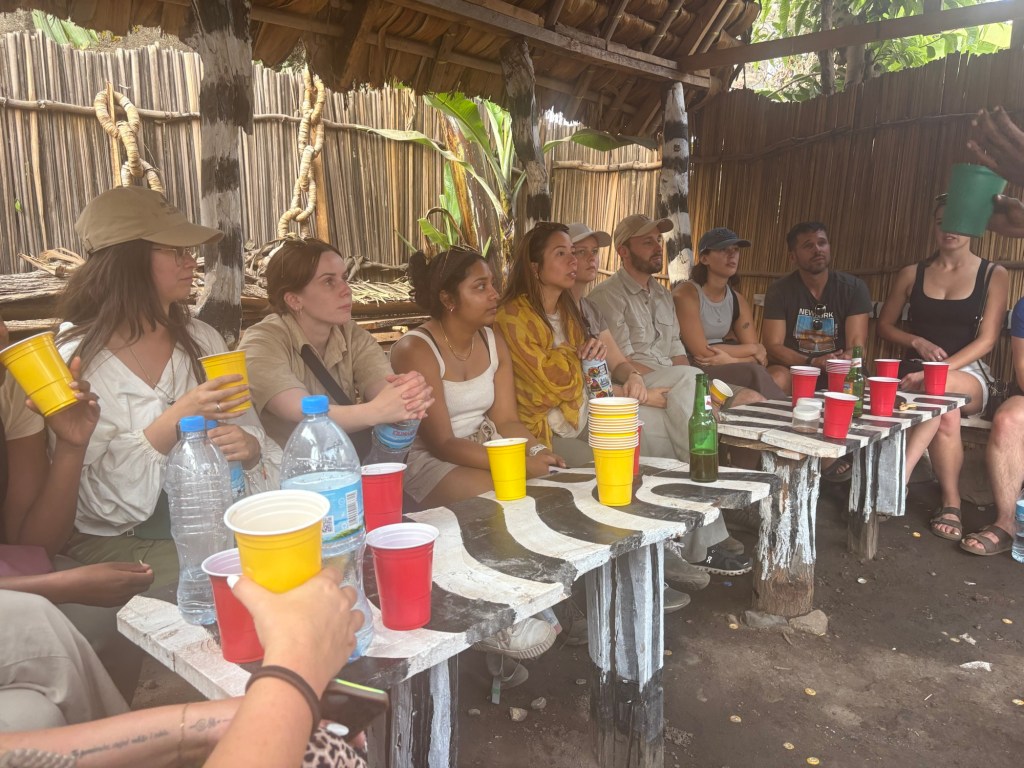
I did like the tradition that if you want to marry a Chaga woman you need to brew 100 litres of banana beer for her family, which you will drink with them so they can get to know you and decide if you are a good enough guy.
We made more stops like this all around the village at painting studios, farms and rice paddies, getting a lovely snapshot of the village and how they live. I really enjoyed the tour but a few days of very little sleep was catching up to us and we desperately wanted to nap on the bus for the last leg of our journey back to Arusha.

We’re back at the hotel, excited to shower and get a small amount of shut eye before another early morning. *eye twitch*.
I AM GOING TO BED.
Sav
 YXY Girls Go Here and There
Wildebeests and millennials, forever living in a gentle simmer of fear. That and I’m pretty sure we’re called a “confusion” when travelling in groups. The more you know!
Eye popping reading in the last post to chill zebra coffee in a crater. Nailing it 🙂
Garrett Cluett cluett.garrett@gmail.com
LikeLike